Most metal corrosion occurs in the atmospheric environment, which contains corrosive components and factors such as oxygen, humidity, temperature changes, and pollutants. Salt spray corrosion is a common and highly destructive form of atmospheric corrosion.
The corrosion of metal materials by salt spray mainly occurs when conductive salt solutions penetrate into the metal interior and cause electrochemical reactions. This forms a micro-battery system of “l(fā)ow-potential metal—electrolyte solution—high-potential impurities,” leading to electron transfer. The metal, acting as the anode, dissolves and forms new compounds, which are the corrosion products. Chloride ions play the primary role in the salt spray corrosion process. They have a strong penetration ability, easily penetrating the metal oxide layer to enter the metal interior and disrupt the metal’s passivation. Additionally, chloride ions have a low hydration energy, making them prone to adsorption on the metal surface. They can replace the oxygen in the protective metal oxide layer, causing metal damage.
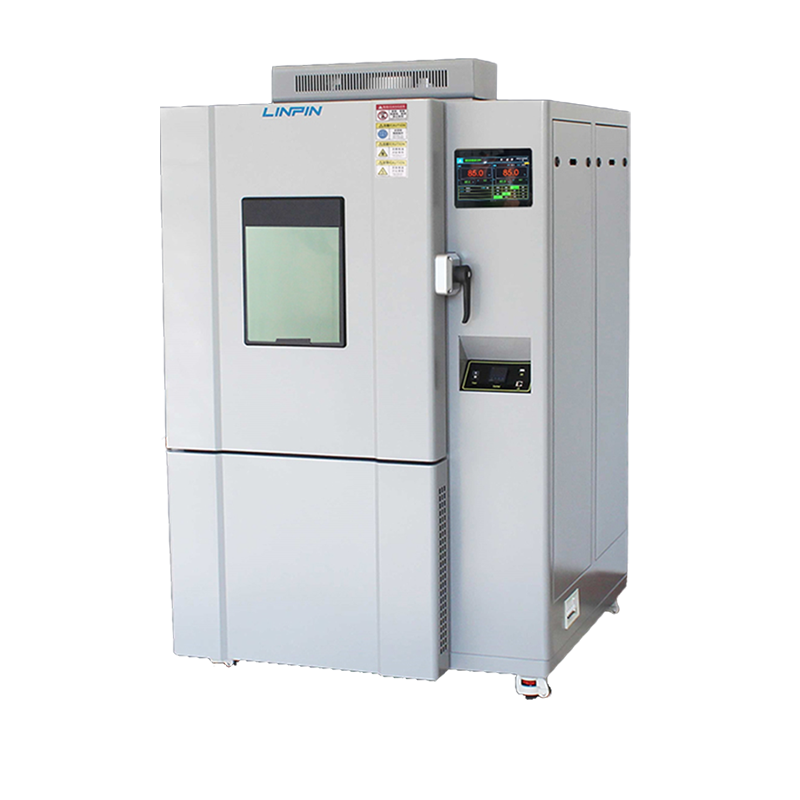
箱.png)
Salt Spray Corrosion Testing Methods and Classification
Salt spray testing is an accelerated corrosion resistance assessment method using an artificial atmosphere. It involves atomizing a saltwater solution with a specific concentration and spraying it into a closed constant-temperature chamber. The corrosion resistance of the tested samples is evaluated by observing the changes in the samples after being placed in the chamber for a period. This is an accelerated testing method. The concentration of chlorides in the salt spray environment can be several or dozens of times higher than that in natural environments, significantly increasing the corrosion rate and shortening the time required to obtain results. While natural environment testing for a product sample may take a year or even several years, artificial salt spray environment testing can yield similar results in just a few days or hours.
Salt Spray Testing Before and After Comparison
Salt spray testing is an accelerated corrosion resistance assessment method using an artificial atmosphere. It involves atomizing a saltwater solution with a specific concentration and spraying it into a closed constant-temperature chamber. The corrosion resistance of the tested samples is evaluated by observing the changes in the samples after being placed in the chamber for a period. This is an accelerated testing method. The concentration of chlorides in the salt spray environment can be several or dozens of times higher than that in natural environments, significantly increasing the corrosion rate and shortening the time required to obtain results. While natural environment testing for a product sample may take a year or even several years, artificial salt spray environment testing can yield similar results in just a few days or hours.

Salt spray tests are mainly divided into four types:
Neutral Salt Spray Test (NSS);
Acetic Acid Salt Spray Test (AASS);
Copper Accelerated Acetic Acid Salt Spray Test (CASS);
Alternating Salt Spray Test.
Comparison of Four Types of Salt Spray Testing Methods in GB/T 10125
Salt Spray Corrosion Testing Equipment
Salt Spray Corrosion Test Chamber Structure Diagram
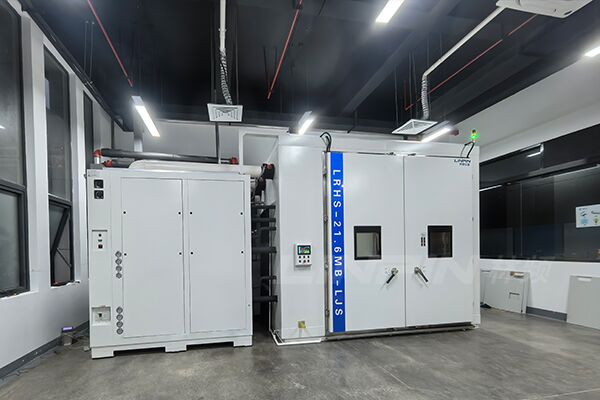
Salt Spray Corrosion Equipment
Salt Spray Test Result Evaluation
The evaluation methods for salt spray test results include rating method, corrosion appearance evaluation method, and weight method.
Rating Method
This method divides the percentage of the corroded area to the total area into several levels according to a specific method. A certain level is used as the qualification judgment basis. It is suitable for evaluating flat samples. For example, GB/T 6461-2002, ISO 10289-2001, ASTM B 537-70(2013), and ASTM D 1654-2005 all use this method to assess the results of salt spray tests.
Protection Rating and Appearance Rating
The calculation methods for RP and RA values are as follows:
RP—Protection Rating Value;
RA—Appearance Rating Value;
A—When calculating RP, it is the percentage of the base metal corrosion area to the total area; when calculating RA, it is the percentage of the coating corrosion area to the total area.
Classification of Coatings and Subjective Evaluation
The protection rating is indicated as: RA/—
For example, if slight rusting exceeds 1% of the surface but is less than 2.5% of the surface, it is indicated as: 5/—
The appearance rating is indicated as: —/ RA value + subjective evaluation + coating damage grade
For example, if moderate spotting occurs with an area exceeding 20%, it is indicated as: —/2mA
The performance rating is indicated as: RA value + subjective evaluation + coating damage grade
For example, if the sample shows no base metal corrosion but has slight corrosion of the anodic coating covering less than 1% of the total area, it is indicated as 10/6sC.
Photograph of Coating that is Cathodic to the Base Metal (Source: ISO 10289-1999)
Corrosion Appearance Evaluation Method
Common Corrosion Characteristics of Electroplated Parts after Salt Spray Testing

Weight Method
This method involves weighing the samples before and after the corrosion test to calculate the weight loss due to corrosion, which is used to evaluate the corrosion resistance quality of the samples. It is particularly suitable for assessing the corrosion resistance quality of a specific metal.
Corrosion Rate Calculation Method:
\[ V_{\text{loss}} = \frac{(m_0 – m_1)}{S \times t} \]
Where:
\( V_{\text{loss}} \)—Metal corrosion rate, g/m2·h;
\( m_0 \)—Mass of the specimen before corrosion, g;
\( m_1 \)—Mass of the specimen after corrosion, g;
\( S \)—Area of the specimen, m2;
\( t \)—Corrosion time of the specimen, h.
Factors Affecting Salt Spray Testing
Test Temperature and Humidity
The critical relative humidity for metal corrosion is approximately 70%. When the relative humidity reaches or exceeds this critical humidity, the salt will deliquesce to form a conductive electrolyte solution. When the relative humidity decreases, the salt solution concentration will increase until crystalline salt precipitates, and the corrosion rate will correspondingly decrease. As the temperature rises, molecular motion intensifies, and the salt spray corrosion rate increases. The International Electrotechnical Commission points out that for every 10°C increase in temperature, the corrosion rate increases by 2 to 3 times, and the conductivity of the electrolyte increases by 10 to 20%. For neutral salt spray testing, a test temperature of 35°C is generally considered appropriate.
Solution Concentration
When the concentration is below 5%, the corrosion rate of steel, nickel, and brass increases with increasing concentration. However, when the concentration exceeds 5%, the corrosion rate of these metals decreases with increasing concentration. This is because, within the low concentration range, the oxygen content increases with the increase in salt concentration. When the salt concentration reaches 5%, the oxygen content reaches a relative saturation. If the salt concentration continues to increase, the oxygen content will correspondingly decrease. The decrease in oxygen content also reduces the de-polarization ability of oxygen, that is, the corrosion effect weakens. For metals such as zinc, cadmium, and copper, the corrosion rate continues to increase with the increase in salt solution concentration.

Sample Placement Angle
The salt spray deposition direction is close to the vertical direction. When samples are placed horizontally, their projected area is the largest, and the salt spray amount on the sample surface is also the highest, resulting in the most severe corrosion. Research results show that when a steel plate is placed at a 45-degree angle to the horizontal line, the corrosion weight loss per square meter is 250 g, and when the steel plate is placed parallel to the vertical line, the corrosion weight loss is 140 g per square meter. The GB/T 2423.17-93 standard stipulates that the placement method for flat samples should be such that the test surface forms a 30-degree angle with the vertical direction.
pH Value
The lower the pH value, the higher the hydrogen ion concentration in the solution, the stronger the acidity, and the stronger the corrosiveness. The pH value of the neutral salt spray test (NSS) is 6.5–7.2. Due to environmental factors, the pH value of the salt solution may change. Therefore, domestic and international salt spray test standards have specified the pH value range of the salt solution and proposed methods to stabilize the pH value of the salt solution during the test to improve the reproducibility of the salt spray test results.
Salt Spray Deposition and Spray Method
The finer the salt spray particles, the larger the surface area they form, the more oxygen they can adsorb, and the stronger their corrosiveness. Traditional spray methods include air pressure spraying and spray tower methods, with the most obvious disadvantage being the poor uniformity of salt spray deposition and larger salt spray particle diameters. Different spray methods can also affect the pH value of the salt solution.
Salt Spray Testing Standards
Standard Number
Standard Name
GB/T 10125-2012
Artificial Atmosphere Corrosion Testing Salt Spray Testing
GB/T 12967.3-2008
Detection Method for Anodic Oxide Coatings on Aluminum and Aluminum Alloys Part 3: Copper Accelerated Acetic Acid Salt Spray Test (CASS Test)
Rating of Test Specimens and Test Pieces after Corrosion Testing of Metal and Other Inorganic Coatings on Metal Substrates
GB/T 2423.17-2008
Environmental Testing for Electrical and Electronic Products Part 2: Test Methods Test Ka: Salt Spray
GB/T 2423.18-2012
Environmental Testing Part 2: Test Methods Test Kb: Salt Spray, Alternating (Sodium Chloride Solution)
General Technical Requirements for Tropical Electrical Products
GJB 4.11-1983
Salt Spray Testing for Marine Electronic Equipment
ASTM B 117-2007
Standard Practice for Operating Salt Spray (Fog) Apparatus
ASTM B 368-2003
Standard Test Method for Copper-Accelerated Acetic Acid-Salt Spray (Fog) Testing
ASTM B 537-70 (2013)
Standard Practice for Rating of Electroplated Panels Subjected to Atmospheric Exposure
ASTM D 1654-2005
Standard Test Method for Evaluation of Painted or Coated Specimens Subjected to Corrosive Environment
ASTM G 85 -2011
Standard Practice for Modified Salt Spray (Fog) Testing
How Long in Natural Environment is Equivalent to One Hour of Salt Spray Testing?
Salt spray testing is divided into two major categories: natural environment exposure testing and artificial accelerated simulated salt spray environment testing. Artificial simulated salt spray environment testing uses a test device with a certain volume space—salt spray test chamber. In its volume space, an artificial salt spray environment is created to assess the corrosion resistance quality of products. Compared with the natural environment, the concentration of chlorides in the salt spray environment can be several or dozens of times higher than that in natural environments, significantly increasing the corrosion rate and shortening the time required to obtain results. For example, in a natural exposure environment, it may take 1 year for a product sample to corrode, while in an artificial simulated salt spray environment, only 24 hours are needed to obtain similar results.
Structure Diagram of a Salt Spray Test Chamber
Artificial simulated salt spray testing includes neutral salt spray testing, acetic acid salt spray testing, copper-accelerated acetic acid salt spray testing, and alternating salt spray testing.
(1) Neutral Salt Spray Test (NSS Test) is the earliest developed and most widely used accelerated corrosion testing method. It uses a 5% sodium chloride saltwater solution with a pH value adjusted to the neutral range (6–7) as the spray solution. The test temperature is set at 35°C, and the salt spray deposition rate is required to be between 1–2 ml/80 cm2·h.
(2) Acetic Acid Salt Spray Test (ASS Test) was developed based on the neutral salt spray test. It involves adding a small amount of glacial acetic acid to a 5% sodium chloride solution to lower the pH value to around 3, making the solution acidic. The resulting salt spray also changes from neutral to acidic. The corrosion rate of this test is about three times faster than that of the NSS test.
(3) Copper-accelerated Acetic Acid Salt Spray Test (CASS Test) is a recently developed rapid salt spray corrosion test. The test temperature is 50°C, and a small amount of copper salt—copper chloride—is added to the salt solution to strongly induce corrosion. The corrosion rate of this test is approximately eight times that of the NSS test.
The specific time conversion is as follows:
Neutral Salt Spray Test 24h ? Natural Environment 1 year
Acetic Acid Salt Spray Test 24h ? Natural Environment 3 years
Copper-accelerated Acetic Acid Salt Spray Test 24h ? Natural Environment 8 years
(Warning: For reference only. Please check the standards for the latest information.)







Copyright ? 2025 Shanghai Linpin Instrument Co., Ltd Copyright
| ICP Number:Shanghai ICP Record No. 12029585-7
| Sitemap







 EN
EN
 中文
中文 Pусский
 Ti?ng Vi?t
 ???????
 ???????? ????


箱.png)

箱.png)